


Musings of a Rock-Climbing Devotee
The Sport Can Transform People through Challenge, Nature, and Community

Long before I tied into a rope or placed my hands on sandstone, I was surrounded by my rock-climber parents’ stories of adventure, exploration, and deep respect for the natural world.
This led me into years of rock climbing in the mountains of southern Nevada, Arizona, Utah, California, the Andean nations of South America, and elsewhere. The cliffs became my teachers, offering lessons in patience, humility, and stewardship.
While rock climbing will not appeal to everyone, to those it does, a transformational relationship with the natural world awaits.
Parents Led the Way
My parents were among the pioneers who helped establish rock climbing in the Red Rock National Conservation Area in southern Nevada, not far from Las Vegas. Through decades of dedication and vision, they developed many of the area’s classic climbing routes, helping transform Red Rock into one of the world’s most celebrated climbing destinations.
Growing up among these towering sandstone cliffs—and literally following in my parents’ footsteps—shaped far more than my love of climbing. It taught me to love the land itself.
Some of my earliest memories are not of reaching summits or completing difficult routes but of watching the desert come alive at sunrise, listening to the wind move through the canyons, and feeling a sense of belonging in wild places. Over time, I realized that climbing was not simply about moving upward; it was about developing a relationship with the natural world.
As climbers, we often enter landscapes that few people experience intimately. We touch ancient rock formations, witness fragile ecosystems, and observe up close the subtle rhythms of nature. These experiences cultivate gratitude and responsibility. The more time I spent climbing, the more I understood that these places were not merely playgrounds for recreation. They were living environments worthy of protection. Loving nature and caring for the Earth became inseparable from my identity as a climber.
What continues to draw me back to climbing is not simply the thrill of reaching the top of a route. It is the journey itself, the moments of uncertainty overcome by determination, the beauty of wild landscapes, and the deep connections that develop between people facing challenges together. Some of my closest friendships were forged hundreds of feet above the ground, where trust is not optional but essential.
In climbing, success is rarely an individual achievement. We depend on one another for safety, encouragement, and support. This shared responsibility fosters empathy, compassion, and a profound sense of community.
For countless climbers, the sport becomes a pathway for personal transformation, influencing emotional well-being, mental health, environmental awareness, and human connection.
Many people view climbing as a sport defined by strength, endurance, and technical skill. While these physical demands are certainly part of the experience, they only scratch the surface of what climbing is about.
For countless climbers, the sport becomes a pathway for personal transformation, influencing emotional well-being, mental health, environmental awareness, and human connection. Through its unique combination of physical challenge, mental engagement, and social interdependence, climbing reveals not only what we are capable of accomplishing but also who we are becoming.
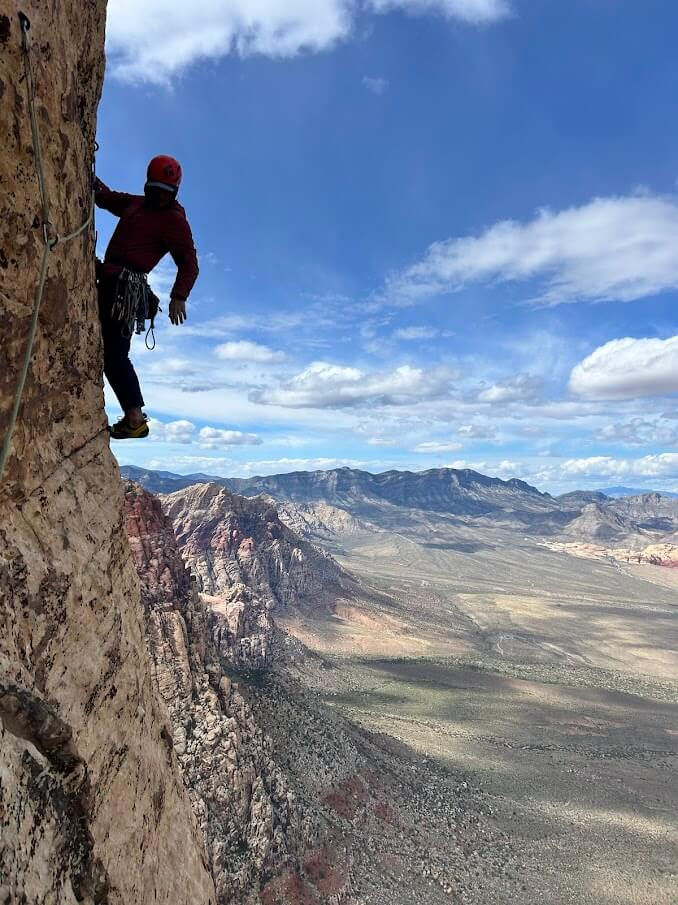
Climbing and ‘Active Mindfulness’
One of the most remarkable aspects of climbing is its ability to demand complete presence.
In our increasingly distracted world, moments of true mindfulness can be difficult to find. Yet climbing naturally creates them. Every handhold, foothold, and movement requires careful attention. When I climb, the constant noise of everyday life fades away.
Moments of true mindfulness can be difficult to find. Yet climbing naturally creates them. Every handhold, foothold, and movement requires careful attention.
The only thing that matters is the texture of the rock beneath my fingertips, the movement of my body, and the rhythm of my breathing. Psychologists often describe this experience as a “flow state,” where action and awareness become fully merged. According to a 2021 study by Katharine Wheatley, climbing functions as a form of active mindfulness that silences intrusive thoughts and focuses attention entirely on the present moment.
This mental immersion has significant benefits for emotional health, according to a thesis by Leeann Wilcox at Winona State University.
Indoor bouldering and outdoor traditional climbing challenge participants to confront obstacles, manage frustration, and persevere through failure. Every difficult route presents a choice: Give up or continue trying. Over time, climbers learn that setbacks are not signs of inadequacy but growth opportunities. This process develops resilience and emotional flexibility while reinforcing self-confidence.
Standing beneath a towering cliff or overlooking a vast desert canyon reminds us that we are part of something much larger than ourselves.
Insights about ‘What Truly Matters’
Outdoor climbing introduces an additional layer of healing through direct contact with nature.
Research has found that traditional climbing combined with exposure to natural environments provides particularly strong psychological benefits and reductions in anxiety. Unlike indoor climbing gyms, natural landscapes inspire awe, humility, and perspective. Standing beneath a towering cliff or overlooking a vast desert canyon reminds us that we are part of something much larger than ourselves.

These moments of awe can have powerful psychological effects. Research suggests that exposure to nature helps reduce stress, interrupt patterns of overthinking, and calm the nervous system. Problems that once seemed overwhelming often feel more manageable when viewed against the backdrop of mountains, deserts, forests, or oceans. The natural world has a remarkable ability to restore perspective and remind us of what truly matters.
Beyond reducing stress, time spent outdoors can improve overall well-being.
Studies have linked exposure to natural environments to enhanced mood, lowered anxiety, and greater emotional balance. For many climbers, these benefits extend beyond mental health and into a deeper sense of spiritual connection. The experience of moving across a cliff face often creates feelings of gratitude, wonder, and reverence that are difficult to replicate elsewhere.
Perhaps most important, spending time in these landscapes often inspires a desire to protect them. Climbers witness firsthand the beauty and fragility of natural environments. We see the effects of drought, erosion, pollution, and human impact. As a result, many climbers develop a strong conservation ethic. The places that challenge us, heal us, and inspire us become places we feel responsible for protecting.
Adventure therapy researchers suggest that meaningful experiences in wilderness settings foster emotional growth, reflection, and environmental stewardship. The more we become connected to nature, the more motivated we are to care for it.
Collaboration over Competition
In many ways, climbing teaches a philosophy of reciprocity. The Earth gives us opportunities for adventure, healing, and personal growth. In return, we are called to respect and protect the landscapes that make those experiences possible.
Whether through conservation efforts, sustainable recreation practices, or simply sharing our appreciation for wild places with others, climbers can play an important role in preserving the natural world for future generations.
While climbing profoundly affects individuals, its influence extends equally into the social realm. The climbing community is built upon trust and mutual dependence. Nowhere is this more evident than in the relationship between climber and belayer. A climber’s safety depends entirely upon another person’s attentiveness and competence. This level of trust creates bonds that are both rare and meaningful.

Because communication is essential for safety, climbers often discuss fears, uncertainties, and limitations openly. This vulnerability strengthens relationships and fosters empathy.
Research examining climbing culture found that the structural necessity of climbing partnerships promotes deep relational trust and cooperation. Tanna Naylor similarly notes that climbing partnerships frequently develop unusually strong bonds because each partner is directly responsible for the other’s well-being.
The culture of climbing reinforces the idea that growth is often a shared journey.
Climbers regularly share knowledge, encourage one another, and celebrate collective success. Whether solving a difficult sequence or supporting a friend through a challenging ascent, the culture of climbing reinforces the idea that growth is often a shared journey.

Ultimately, rock climbing demonstrates that human growth often emerges through meaningful challenge. The sport strengthens the body, but its deepest impact lies in its ability to transform the mind, nurture the spirit, and cultivate a profound connection with both people and the natural world. Through movement, trust, awe, and shared struggle, climbing reminds us that we are connected to each other, to the Earth, and to something larger than ourselves.
For me, climbing has never been solely about reaching the top of a route. It has been about learning to appreciate the beauty of wild places, developing friendships rooted in trust, and discovering a sense of purpose in caring for the landscapes that have given me so much.
Every climb becomes a reminder that healing ourselves and healing the earth are not separate endeavors. They are intertwined journeys. When we spend time in nature, challenge ourselves, and build meaningful relationships, we often emerge not only stronger but also more compassionate, more grounded, and more committed to protecting the world that sustains us.
*George Daniel Urioste is a schoolteacher, rock climber, and freelance author who lives in Las Vegas, Nevada.

Rock climbing shows how challenge and persistence can lead to real progress. Slope 2 offers a similar experience, where each run pushes you to improve your focus and reactions.
Gracias por compartir este contenido, resulta bastante útil para quienes disfrutan consultar diferentes sorteos y sus resultados. Una buena referencia debe ser sencilla y práctica. En ese sentido, consultar loteria florida noche puede ayudar a encontrar los resultados de manera rápida y mantener un seguimiento más cómodo.
I wasn't expecting such a simple idea to be so entertaining. eggy car is the kind of game that's perfect for a few spare minutes.