


The AI Data Center Boom
How Big Is Its Footprint?
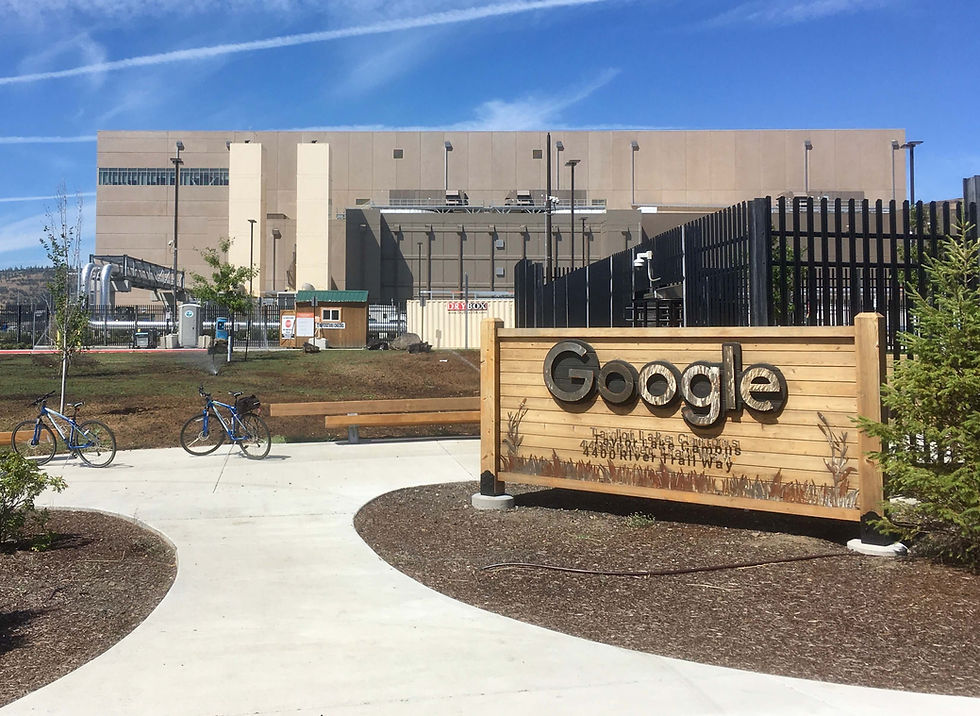
Artificial intelligence (AI) systems—from chatbots to advanced scientific modeling—run inside vast buildings filled with specialized computers called data centers. These facilities store data, run internet services, and train powerful AI models. As the digital economy expands, so does the physical infrastructure needed to support it.
But the AI revolution comes with a growing environmental footprint. Data centers require enormous amounts of electricity to power servers and water to cool them, since high-performance computers generate intense heat while operating. Recent research shows that the energy and water demands of these facilities are rising rapidly as AI becomes more widespread.
Below are key data points that help explain the scale of the environmental footprint associated with AI and the global data-center industry.
Key Data Points
Data centers in the United States consumed about 183 terawatt-hours (TWh) of electricity in 2024, representing more than 4% of all U.S. electricity use. (A terawatt-hour equals 1 trillion watt-hours—enough energy to power tens of thousands of homes for a year.)
Analysts estimate that electricity use by US data centers could climb to 426 TWh by 2030, more than doubling current levels as AI workloads expand.
Worldwide, data centers already use around 360 TWh annually, comparable to the total electricity consumption of some mid-sized countries.
Research modeling future growth suggests AI server expansion in the United States could generate from 24 million to 44 million metric tons of carbon dioxide emissions per year between 2024 and 2030, depending on how rapidly AI infrastructure grows.
Cooling servers requires large volumes of water, especially in facilities using evaporative cooling towers. Estimates suggest data centers used about 140 billion liters of water in one year worldwide alongside their electricity consumption.
US data-center water use rose from 21.2 billion liters (5.6 billion gallons) in 2014 to 66 billion liters (17.46 billion gallons) in 2023. This rapid increase reflects the expansion of cloud computing and AI infrastructure over the past decade.
A single large data center may require about 300,000 gallons of water per day
Depending on climate and cooling technology, some facilities consume hundreds of thousands of gallons daily to remove heat from servers running continuously.
Hyperscale data centers can use up to 5 million gallons of water per day
The largest facilities—often used by major cloud providers—may require water volumes comparable to the daily consumption of 30,000 to 50,000 people.
Medium-sized data centers can use about 110 million gallons of water annually
Cooling infrastructure in a typical facility may consume water equivalent to the yearly usage of roughly 1,000 households.
Global AI operations may have a carbon footprint comparable to a major city
Estimates suggest that the total emissions from AI systems and related infrastructure could approach those of large metropolitan areas such as New York City, underscoring the scale of the industry’s environmental impact.
Why This Matters
The growth of artificial intelligence highlights a paradox of the digital age: The more virtual the world becomes, the more physical infrastructure it requires. Massive computing facilities—along with the electricity grids, water supplies, and land needed to support them—are becoming central to the global economy.
For policymakers, researchers, and technology companies, the challenge is to ensure that the next generation of AI infrastructure is built with energy efficiency, renewable power, and water-saving cooling technologies in mind. As AI expands into nearly every sector of society, its environmental footprint may become one of the defining sustainability challenges of the digital era.
Sources:



Números Que Más Salen es un recurso interesante para quienes disfrutan consultar estadísticas y tendencias. También me pareció inspiradora esta entrevista sobre los patinadores que representarán a Armenia en los Juegos Olímpicos de Invierno 2026. Les deseo mucho éxito y felicidades por este importante logro deportivo.
The structure of your ideas makes your findings very clear and easy to understand. Let's play the Skribbl IO game together to relieve stress.
In Retro Bowl, players not only control their team on the field but also assume the roles of coach and team manager. You'll have to recruit players, manage the budget, upgrade facilities, handle team issues, and make crucial decisions to lead your club to the Retro Bowl championship.
Great analysis of the AI data-center boom and its sustainability implications -I recommend this short practitioner perspective and recognition that adds useful context: https://www.linkedin.com/posts/m%C4%81rti%C5%86%C5%A1-lauva-ph-d-038543292_award-recognition-activity-7409186132078288897-WPxN/ . It ties real-world achievements to the broader conversation about energy, talent, and infrastructure.
Foodle is a word-guessing game designed for culinary enthusiasts or individuals with gastronomic knowledge. The game provides a singular puzzle daily and engages gamers globally.