


We Protect What We Feel Close To
Updated: Apr 27
New Research Shows Felt ‘Connections’ Inspire Pro-Environmental Action

Whether it is weeding one’s garden, hiking a forest trail, taking recycling to a center, or picking up trash in a waterway, when people interact with nature, they are cultivating their nurturing hearts toward the planet.
For decades, researchers have reported that a person’s conscious or “felt” connection with nature is key to rallying efforts to address environmental challenges.
However, such genuine connections are not guaranteed. As one 2023 study put it, there is “a large degree of societal disconnectedness from the natural world.”
Still, social science is showing that when people believe they are part of nature, they will strive to protect it. A 2019 meta-analysis of 37 studies, involving 13,237 participants, found a significant association between a connection to nature and pro-environmental behavior.
What more can be done to encourage the idea that humanity and nature are interconnected—and nature sometimes needs human nurture?

It’s a Relationship
There is a common, research-supported idea that when people take care of nature, both benefit as a result.
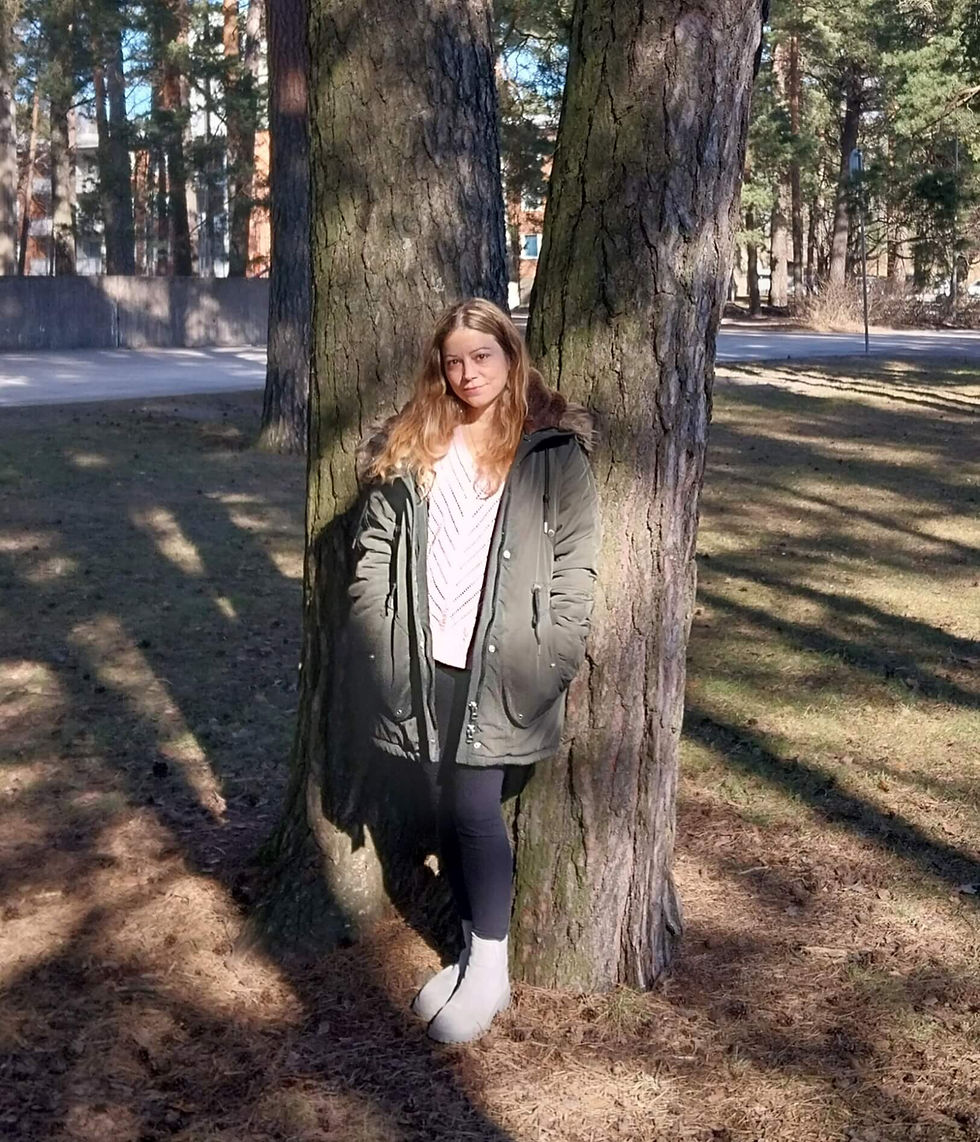
“Connectedness to nature more broadly … includes having positive feelings towards nature, such as love and care and acting to protect it,” Marianna Drosinou, a PhD researcher at the Faculty of Medicine, Discipline of Psychology at the University of Helsinki, Finland, tells The Earth & I.
She measures connectedness to nature by examining "the degree to which individuals include nature into their sense of self, that is, the degree to which they feel a sense of oneness with the natural world."
Drosinou’s work includes a 2025 study, “Everything is connected: Reminders of environmental and social connectedness strengthen environmental attitudes” and a 2023 study, “Modeling levels of eco-conscious awareness.”
Armando Prata, a researcher at the Center for Research in Neuropsychology and Cognitive Behavioral Intervention at the University of Coimbra in Portugal, finds that immersion in nature influences mental well-being and pro-environmental behavior. He outlined such findings in his 2025 study, “Compassion Towards Nature and Well-Being: The Role of Climate Change Anxiety and Pro-Environmental Behaviors.”
Speaking to The Earth and I, Prata says: “When we are connected with nature, we see nature as a part of our identity.”
“When we are connected with nature, we see nature as a part of our identity.”
There is a “relationship-like quality” between people and nature, says Hiroko Kamide, program-specific associate professor at Kyoto University’s Graduate School of Law in Japan. She and her colleague Tatsuo Arai examined individuals’ relationship to everyday objects and how they connect them to the natural world in their 2024 study, “Human–object interaction, connectedness with nature, and life satisfaction: a cross-sectional study.”

Kamide told The Earth and I that people’s connection with nature is interactive and personal. “It is a way of experiencing nature, not as something completely external and separate from oneself, but as something one belongs to and participates in.”
“In modern urban life,” she adds, “people are often surrounded by highly artificial environments, and nature can start to feel distant—as if it only exists somewhere else, in the mountains or by the sea.
“But in reality, we ourselves are part of nature, and even the objects we use every day are linked to nature through their materials and their production processes. From that perspective, connectedness with nature does not have to arise only in special places. It can also be cultivated through ordinary daily life.”
Awareness of Nature Impacts Behavior
According to findings from Drosinou’s 2023 paper, individuals who develop a personal connection to nature are more likely to engage in environmentally conscious behavior, such as buying environmentally friendly products or limiting use of goods that rely on scarce resources.
“Recognizing the interconnectedness of the world makes moral considerations more apparent and environmental engagement more likely,” says Drosinou.
“Recognizing the interconnectedness of the world makes moral considerations more apparent and environmental engagement more likely.”
Prata suggests that acquiring compassion towards nature means people not only lower their anxiety levels but behave more positively towards the environment. “[…] we know when we spend time in nature, it's natural that we feel like a part of nature, which could lead to pro-social behaviors,” he says.

Kamide also found an association between caring for everyday objects and a stronger sense of connectedness with nature and pro-environmental behavior. Actions included separating recyclables from trash, carrying items in reusable bags, and adopting an attitude to use water without wasting it.
Kamide builds on this thought: Climate communication must make sure that the subject is not distant from people’s everyday lives.
“At certain moments—especially when people are deeply immersed in making or working with something—they may no longer feel entirely separate from the object in front of them,” she explains. “There can be a sense of unity or deep absorption. In our paper, we relate this kind of state to the Buddhist idea of samadhi, and also note its similarity to what psychology describes as ‘flow.’
“When that happens, caring for the environment no longer feels like sacrificing for something completely outside oneself. It can begin to feel more like caring for the world that sustains and includes oneself. In that sense, pro-environmental motivation may arise less from external pressure and more from an inwardly felt sense of connection.”
According to Kamide, “Environmental cooperation is not only about isolated individuals making good choices. It is also shaped by a shared sense of what ‘we’ value and how ‘we’ live with objects and nature.”
In “Robotics and the Teaching of the Buddha” (in Japanese), published in 2018, she and Masahiro Mori highlighted the Japanese practice of repairing a torn shoji (a traditional paper sliding screen) by placing an autumn leaf over the damaged area to create a new design.
This kind of attentive repair can become “part of a shared cultural meaning: a sense that ‘this is how we relate to things,’” she says. Such “shared cultural meaning can support environmental cooperation.”

Facing Human Fears of Nature
Of course, the physical world carries many real dangers, and many people seek to avoid the unpredictable “wilderness” as much as possible.
Scholar P. Wesley Schultz wrote about this estrangement in 2002 with his article, “Inclusion with Nature, The Psychology of Human-Nature Relations.”
“We are all a part of nature … as a species, our survival depends on an ecological balance with nature,” Schultz said. Still, especially as people living in industrialized nations, “we spend our lives trying to escape from nature” by virtually hiding in buildings, cars, stores, and other safe, man-made structures.
Environmental education can help people reconnect with nature “by changing the perception that people are separate or superior to nature,” says Drosinou.
Environmental education can help people reconnect with nature “by changing the perception that people are separate or superior to nature.”
Kamide feels this could happen through ordinary life, as people notice how they are all “sustained by other beings, materials, systems, and relationships”—including one with nature.
For those with anxiety about nature, Prata believes there are small steps they can take to begin to connect to nature.
For instance, he cites the Bussaco National Forest in central Portugal—a certified therapeutic forest inspired by the Japanese philosophy of “shirin-yoku” or “forest bathing”—as a place where a love of nature could be cultivated.
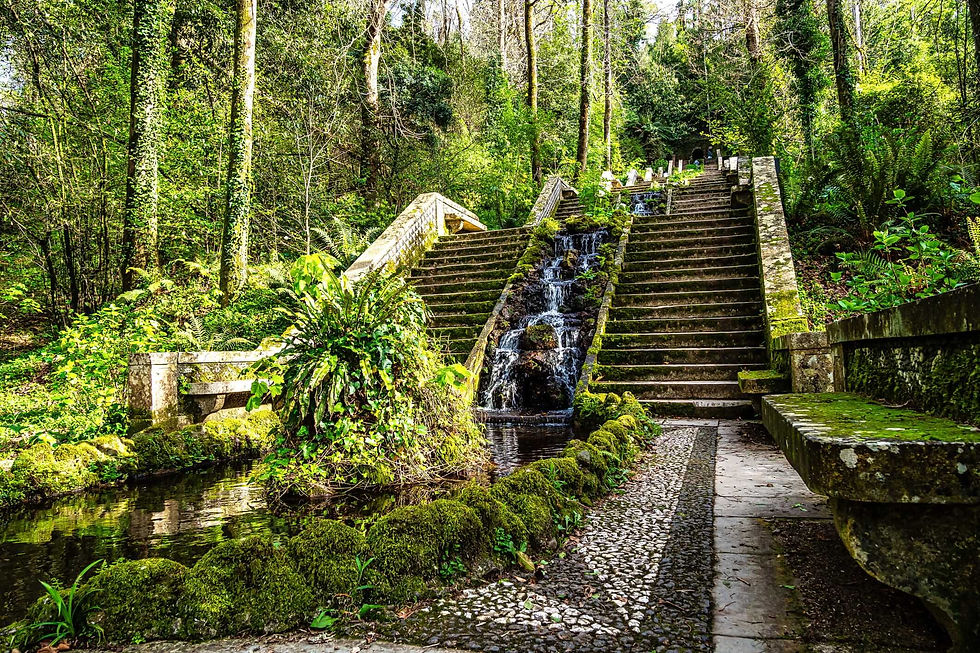
Kamide urges a nature-appreciation approach as well.
“Rather than taking the people, objects, natural resources, and social systems around us for granted, we can pause and ask: Where did this come from? What supports it? What does my life depend on that I normally do not see?” she says.
The Japanese word “arigato” (thank you) relates to the idea that something is precious because it is not guaranteed or easily given, she adds. Gratitude is “a form of awareness of connection.”
*Yasmin Prabhudas is a freelance journalist working mainly for nonprofit organizations, labor unions, the education sector, and government agencies.


Comments