


Denser Zoning as a Key to Conserving Natural Lands
Targeting the Sprawl That Attends Single-Family Housing

The detached single-family home on a spacious suburban lot has long symbolized American prosperity. But as development sprawls further outward—consuming farmlands, wetlands, and forests—environmental costs climb: Low-density, car-centric housing developments are a key driver of carbon emissions, land degradation, and biodiversity loss.
A growing number of urban planners and environmental advocates now argue that rethinking zoning—especially R1 (single-family-only) zoning—is essential to solving the interconnected crises of climate change, affordability, and economic and racial segregation. In a great many US cities, up to 80% of residential land is zoned exclusively for single-family homes, effectively banning more space-efficient and economical forms of housing.
In a great many US cities, up to 80% of residential land is zoned exclusively for single-family homes.
Reform of this R1 zoning colossus, however, goes against a mindset that is deeply ingrained in US and other countries’ laws, institutions, and psychology. Owning a home with a bit of land is a symbol of success that has powerful emotional overtones, tapping into the human need for security, wealth, privacy, and independence.
Still, research has shown that car-dependent single-family-home communities can be isolating with limited opportunities to socialize with neighbors. Reformers believe new kinds of designed, higher-density communities can be friendlier, busier, and more family and environmentally friendly.
Reframing Zoning
Currently, R1 zoning dominates the housing development landscape.
Single-family zoning prohibits duplexes, triplexes, courtyard housing, and low-rise apartment buildings (e.g., six to 10 stories) on vast swaths of urban and suburban land. It also fuels sprawl, pushing new housing developments into outlying natural and agricultural areas.
This development push has led to the loss of over 784 square miles (501,000 acres) of natural habitat in California alone between 2001 and 2011 (about the size of Los Angeles and San Diego together). These are not just empty spaces; they are active ecosystems that store carbon, filter the air and water, and provide habitats for countless species. When these landscapes are paved over, not only is carbon released but the land’s capacity to remove CO2 from the atmosphere is destroyed.
Outward expansion directly fuels the climate crisis by entrenching a reliance on automobiles. With homes located far from jobs, schools, and amenities, driving becomes a necessity, making transportation the largest source of air pollution in states like Minnesota.
According to The New York Times, cities across the US are now questioning the once-unshakable ideal of the suburban home, as both population and climate pressures mount. Thoughtful densification—building more than one dwelling per lot—is seen as a powerful, environmentally friendly strategy. As a Sierra Club analysis aptly puts it, “The beauty of density is it utilizes already developed land (e.g., vacant parking lots) and allows more people to live within short distances of jobs, transit, and amenities.”
This “infill” approach allows for urban growth while preserving the undeveloped wilderness, farmland, and forests at the outer edges of municipalities. And when infill is combined with what we might call upfill—constructing multifamily housing and low-rise apartment buildings—cities can absorb yet more growth.
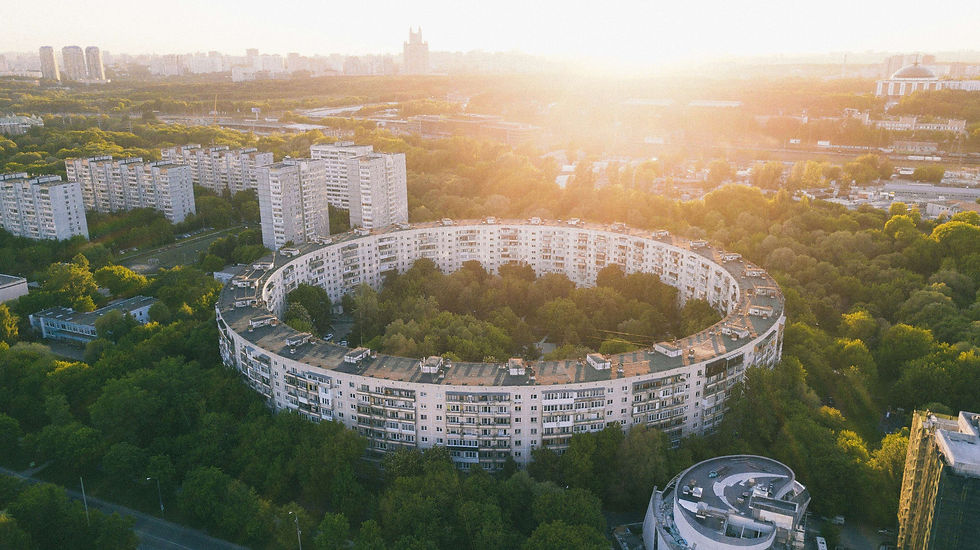
Critically, higher density can also support biodiversity. According to Seattle nonprofit The Urbanist, research shows that densifying population centers can increase habitat availability and ecosystem services when planned carefully with nature in mind—through green corridors, native vegetation, and water-wise landscaping. This finding challenges the assumption that density and ecological health are mutually exclusive.
Moreover, denser development can reduce air and water pollution through smarter stormwater management, energy-efficient housing, and shorter vehicle commutes. With coordinated land use planning, cities can become “nature bright spots”—places where people and wildlife coexist.
Benefits of Reforming R1 Zoning | Potential Drawbacks of Zoning Reform |
● Increases housing supply in high-demand areas | ● Risk of infrastructure strain (sewer, schools, transit) |
● Mitigates urban sprawl and habitat loss | ● Potential traffic increases and parking pressure |
● Enhances affordability and inclusion | ● Loss of neighborhood character |
● Supports environmental goals via infill development | ● Local political resistance and NIMBY opposition |
● Enables nature-integrated design in denser settings | ● Requires strong tenant protections and anti-displacement policy |
● Expands ownership options via condos and townhomes | ● Needs complementary green building and transit investments |
Affordability, Equity, and the “Missing Middle”
Zoning reform advocates also argue that R1 restrictions artificially limit the housing supply, contributing to surging prices. According to Shelterforce, more housing can increase affordability—but only if it’s built in areas where people actually want and need to live, such as near jobs, transit, and schools.
The shortage is especially acute in high-opportunity areas. From 2000 to 2015, the US underproduced 7.3 million homes, according to housing advocacy group Up for Growth. R1 zoning makes it difficult to build duplexes, fourplexes, and other “missing middle” housing that once made neighborhoods walkable and socially mixed.
This system also perpetuates racial and economic segregation. Zoning laws were historically partly designed to exclude lower-income and nonwhite residents from wealthier neighborhoods—a legacy documented in Richard Rothstein’s The Color of Law. Today, those same rules continue to shape who has access to good schools, clean air, and job-rich locations.
As Apartment Therapy explains, dismantling these barriers isn’t just about building more housing—it’s about correcting long-standing injustices.
Some cities and states have begun to act:
Minneapolis eliminated single-family-only zoning citywide in 2018, allowing up to three units per lot.
Oregon passed HB 2001, which ends single-family zoning in most urban areas statewide.
California eased restrictions on so-called accessory dwelling units and lot splitting, making it easier to add housing within existing neighborhoods.
These changes have provoked both support and backlash. Homeowners often cite concerns over neighborhood character degradation, parking congestion, and infrastructure strain. Others worry about housing values, especially since single-family homes are often seen as safer investments than multifamily properties.
However, zoning reformers say these objections must be weighed against the high costs of inaction. Expanding outward continues to swallow natural areas, degrade infrastructure, increase emissions, and widen affordability gaps.
Zoning, Ownership, and the American Dream
Much of today’s multifamily construction is geared toward rentals, but zoning reform could also enable new paths to ownership: co-ops, townhomes, and condominiums. These options are more attainable for middle-income families than detached homes, especially in high-cost metro areas.
Medium’s “Sidewalk Talk” blog argues that expanding housing types allows more people—not just the wealthiest—to participate in the dream of homeownership. And denser development can bolster tax revenues, support small businesses, and sustain more walkable, vibrant neighborhoods.
In this video, four people talk about how they and others brought zoning reform to the US cities of Minneapolis, Minnesota; Tulsa, Oklahoma; and Buffalo, New York. © Public Broadcasting System
Still, reform must be paired with policies that protect renters from displacement and incentivize affordable housing construction. Ending R1 zoning is not a stand-alone solution—but it is a critical lever for equity, sustainability, and economic opportunity.
Reform must be paired with policies that protect renters from displacement and incentivize affordable housing construction.
To understand the scale of the challenge, consider that detached homes make up over 60% of US housing units, according to Statista. And per the US Census Bureau, the majority of new residential construction remains single-family, despite increasing demand for multiunit options.
Some Multifamily-Housing Communities
Here are four existing communities that demonstrate how multifamily housing, nature access, and social cohesion can thrive together—with lower pollution and safer streets.
Mueller – Austin, Texas
A master-planned community built on the site of the old airport, Mueller features townhomes, apartments, and condos with shared courtyards, pocket parks, and trails. It’s designed around walkability, with cafes, shops, and even a farmers market fostering neighborly interaction.
Serenbe – Chattahoochee Hills, Georgia
Just outside Atlanta, Serenbe is a wellness-focused community with multifamily cottages and townhouses along with single-family homes. All have front porches but no backyards. They face a common greenspace and are interwoven with nature trails. Cafes, shops, art galleries, and services are nearby in the village-style layout, encouraging walking and interacting with neighbors.
Zibi – Ottawa-Gatineau, Ontario/Quebec
A waterfront redevelopment project, Zibi features condos and apartments with communal courtyards and access to green spaces. It’s designed as a mixed-use, walkable neighborhood with shops, restaurants, and cultural venues that connect residents across provincial lines.
The High Line Neighborhood – Manhattan, New York City

The High Line is a 1.45-mile-long elevated linear park and greenway created on a former New York Central Railroad spur. Opened in 2009, the park has inspired cities throughout the United States to redevelop greyfields (obsolete infrastructure) and brownfields (abandoned industrial land) as public spaces with mixed housing. The High Line has spurred development of low-rise apartment buildings and brownstones in adjacent neighborhoods, increasing real-estate values and prices along the route.
Nature and Crime Reduction
Multifamily housing doesn’t just reduce sprawl—it can reduce crime and improve mental health, especially when designed with green space. A 2024 overview by the National Environmental Education Foundation explains how adding greenery to neighborhood spaces can reduce violence and boost health. In addition, a 2022 study by the University of Edinburgh found that more urban green space correlates with lower property and violent crime rates—even after accounting for poverty and demographics. Green space, the study concluded, may reduce aggression and stress, contributing to safer neighborhoods.
According to a 2018 National Institutes of Health publication, “Simply being exposed to nature has been shown to improve mood, reduce anxiety, and enhance self-esteem. People who see greenery every day may have better mental health and be less stressed. Stress increases the risk of heart disease, diabetes, and other diseases.” Thus, green enclaves in urban areas correlate with greater peace of mind, increased trust, and stronger community ties—contributing to both individual and neighborhood well-being.
Reforming single-family zoning laws is not a panacea—and it is certainly not easy. But when thoughtfully implemented, it offers a hopeful path toward solving multiple problems at once, both in the way of environmental precariousness and housing scarcity.
*Karl Selle is a freelance writer living in Bowie, Maryland, USA.


Comments