


German and Korean DMZs Are Now Environmental Sanctuaries
Will Lessons Learned From Germany’s ‘Green Belt’ Help Protect Biodiversity in Korea’s ‘Death Strip’?
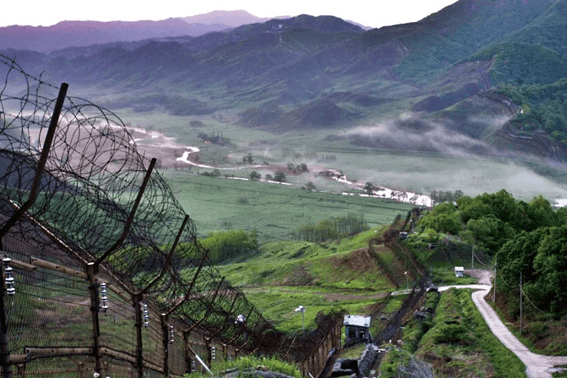
Two infamous demilitarized zones (DMZs)—one stemming from the 1950–53 Korean War and the other from the post-World War II Cold War—cruelly divided people, yet life found unexpected refuge within those boundary sectors. Now, both Korea’s and Europe’s DMZs have becomes ribbons of biodiversity blossoming with wildlife, greenery, and vital ecosystems.
The two DMZs have different origins: Korea’s formed after the 1953 armistice that ended Korean War hostilities between North and South. Europe’s “Iron Curtain” DMZ was created after World War II when the Soviet Union refused to release its grip on the countries of Eastern Europe.
Both spent years as heavily guarded “no-man’s-lands,” with guard towers, armed troops, and impassable barriers.
But when people withdrew, forests returned. Wetlands revived. Endangered wildlife began to claim these spaces as habitat.
Today, these DMZs have experienced different fates: Korea’s no-go zone remains a dangerous military demarcation line marked by barbed wire, landmines, and guard posts. In Europe, the Iron Curtain borderland, once known as the Cold War’s infamous “Death Strip,” began removing its concrete barriers and antipersonnel mines in 1991, as part of the dissolution of the Soviet Union.
Now modernization on Europe’s Green Belt, a 7,700-mile-long ecological corridor, is in full swing. The challenge is to preserve the space along which animals can freely move to hunt, forage, and breed even as infrastructure development—highways, railways, high-voltage power lines—moves in, despite strong pro-environment regulations.
The European DMZ development thus raises a question for the still-hostile Koreas: When their barriers come down, can the ecological miracles they have sheltered be preserved?
Germany: From ‘Death Strip’ to European Green Belt
In Germany, the Berlin Wall and the East–West German border were once iconic symbols of the Cold War. But after the fall of the Berlin Wall in 1989, German environmental groups and a groundswell of ecologists began to see the space differently—not as land for development but as an ecological legacy worth preserving.
Today, the former 1,393-kilometer (865-mile) East–West German Cold War border is the backbone of a vast, serpentine ecological corridor known as the European Green Belt. The total length of that corridor is 12,500 kilometers (7,768 miles)—from the Finland–Russia border on the Barents Sea above the Arctic Circle down to Greece on the Adriatic Sea and Turkey on the Black Sea.
This continuous landscape of forests, grasslands, rivers, and wetlands has become one of Europe’s most important wildlife corridors. The European Green Belt Association describes it as “the backbone of a Pan‑European ecological network” extending across 24 countries, forming an extraordinary ecological corridor and replacing the former Iron Curtain. Bears, wolves, the Balkan lynx, migratory birds, plus old forests, wetlands, and other vital, natural habitats are being reclaimed, said EuroNatur, one of the conservation organizations monitoring the European Green Belt.
Political barriers disappeared, and ecological connectivity remained.

Germany, however, also offers a warning.
After the border opened, roads, railways, and tourism development fragmented parts of the ecological corridor.
The German Association for Environment and Nature Conservation (BUND Naturschutz) has documented how, after the border opened, roads, railways, and tourism fragmented parts of the ecological corridor. It also showed how agricultural and industrial development pressed on Green Belt borders and threatened sensitive species' habitats.
Peace for the ecology of the long north–south strip was not assured with the tearing down of barriers. In many ways, the harder challenge began afterward.
Korean DMZ: A Core of the Peninsula’s Biodiversity
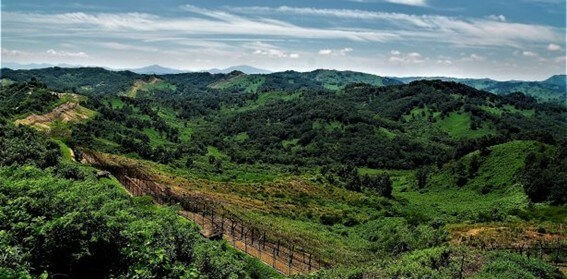
The Korean DMZ, though still off-limits to the public, is internationally recognized as a region of exceptionally high biodiversity-conservation value, despite the continued military and political tensions surrounding it.
The DMZ stretches east to west for 248 kilometers (154 miles) and spans 4 kilometers (2.4 miles) in width along the Military Demarcation Line. This ribbon-like landscape begins in the rugged mountain spine of the Baekdudaegan range in the east, continues through central rivers and wetlands, and reaches the Han River estuary and tidal flats in the west.
[The DMZ’s] uninterrupted mosaic of forests, grasslands, rivers, wetlands, farmland, and mudflats give it ecological functions far more powerful than isolated protected areas.
Its uninterrupted mosaic of forests, grasslands, rivers, wetlands, farmland, and mudflats give it ecological functions far more powerful than isolated protected areas. In ecology, connectivity is considered essential for species movement, genetic exchange, food web stability, and adaptation to climate change. Connected ecological corridors thus offer far greater survival potential than fragmented reserves.
According to surveys by the South Korean National Institute of Ecology, more than 5,900 species of wildlife have been identified in the DMZ region, and 37.8% of Korea’s endangered wildlife species inhabit the DMZ or adjacent areas. Within this narrow military boundary lies a concentrated core of the Korean Peninsula’s biodiversity.

The ecological value of the Korean DMZ does not lie merely in the presence of rare animals. More importantly, it is a space of coexistence, where living organisms sustain intricate relationships with one another.
In the Cheorwon Plain, endangered red-crowned cranes and white-naped cranes move between wetlands and farmlands in search of food. In rivers, otters function as apex predators, maintaining food web balance. In the eastern mountains, rare mammals, such as long-tailed gorals and musk deer, help shape vegetation structure, which in turn alters habitat conditions for insects, birds, and smaller mammals. In the western Han River estuary, tidal flats serve as breeding and resting grounds for black-faced spoonbills and countless migratory birds.
The DMZ is more than wildlife habitat. It is a living system of life, in which species sustain one another through a web of ecological interdependence.
The Korean DMZ is more than wildlife habitat. It is a living system, in which species sustain one another through a web of ecological interdependence.


An Ecological Laboratory Born of Military Tension
The Korean DMZ is often imagined as a pristine primeval forest untouched by humans. In reality, it is not.
Limited wildfires, disturbances around guard posts, maintenance of military facilities, and certain forms of human management have continued over the decades. Yet despite these disruptions, the DMZ has maintained extraordinary biodiversity precisely because limited disturbance has created an array of habitats.
Ecologist Joseph Connell’s Intermediate Disturbance Hypothesis helps explain this phenomenon. If disturbance is excessively severe or absent altogether, biodiversity declines. But moderate levels of disturbance create a patchwork of grasslands, shrublands, forests, and wetlands that allow more species to coexist.
The DMZ was never intentionally designed as such but, in effect, the Cold War created a vast ecological laboratory. War destroyed forests, but military tension prevented large-scale development. Here lies a paradox rare in both ecology and politics: Human hostility became a shield for nature.
Invisible Death: Landmines and Wildlife

The DMZ’s ecological miracles in Europe and Korea are also home to one of war’s most brutal legacies: landmines.
Hundreds of thousands of mines are still believed to remain in the Korean DMZ and DMZ-border areas. Hidden underground and largely invisible, they pose deadly threats not only to humans but also to wildlife. Cases of wild boar, water deer, gorals, and other large mammals being killed or severely injured after triggering mines have been repeatedly reported.
The damage caused by landmine explosions extends beyond individual casualties. Mines disrupt soil structure, destroy vegetation, and leave behind contamination from heavy metals and chemical residues.
The danger is particularly acute for large mammals that follow established movement corridors. Yet the damage caused by landmine explosions extends beyond individual casualties. Mines disrupt soil structure, destroy vegetation, and leave behind contamination from heavy metals and chemical residues. For wildlife, landmines are invisible instruments of death.
To protect wildlife, international demining experts have proposed a new approach that might be called “ecological demining.” Rather than indiscriminately excavating land in search of buried explosives, this approach combines high-resolution terrain analysis, drone-based thermal sensing, wildlife movement data, and low-disturbance equipment so that mine removal can be carried out while minimizing ecological damage.
Some international specialists have also proposed identifying major wildlife migration routes first and securing ecological safe corridors as a priority.
In Korea’s DMZ, however, such systematic wildlife-oriented protection measures have yet to be meaningfully established.
Is the Korean DMZ the Quietest Prelude to Reunification?
In Korea, political rhetoric still uses the language of confrontation. Military exercises continue on both sides of the zone. The barbed wire does not rust away, and the surveillance lights continue to illuminate the border night after night.
Yet within those boundaries, a completely different order has long been at work. Cranes cross the border. Otters move along waterways. Plants scatter seeds on the wind. Rivers do not learn military demarcation lines, and migratory birds do not ask for nationality.
Life does not recognize the divisions humans create.

The DMZ is not merely a military boundary. Nor does it belong exclusively to either South Korea or North Korea. It is a shared ecological asset born of division.
Political scientists and experts in environmental diplomacy have long proposed transforming the DMZ into a Peace Ecology Zone for the Korean Peninsula. Ideas such as joint ecological surveys, designation as an international biosphere reserve, cooperative wetland management, and cross-border migratory bird protection have been proposed as trust-building mechanisms capable of easing military tensions.
Human societies have yet to reach agreement, but nature has maintained an order of coexistence for decades.
Germany transformed the wounds of division into a Green Belt. At the same time, it showed how quickly development after opening can destroy ecological corridors.
After 1991, Germany transformed the wounds of division into a Green Belt. At the same time, it showed how quickly development can complicate ecological corridors.
Korea, too, may one day face the same dilemma: When the barbed wire comes down, will the land be filled with roads and industrial development? Or will it be allowed to remain a corridor of life for future generations?
The DMZ raises a question for both Koreas that is as practical as it is profound: After decades of separation, is it possible to find a way to live together again?
Nature does not offer a political solution, but it does provide a powerful example. For decades, the forests and wildlife of the DMZ have shown that life can return, connections can be restored, and coexistence can emerge even in a landscape shaped by conflict.
*Chi-Hyun Park is a longtime Korea-based environmental journalist who holds a PhD in engineering.
Comments