


‘Storm Fear’ Inspires Bold Infrastructure Renewal
Updated: Apr 28
How Science, AI, and Smart Engineering Can Create Safer Cities

In April and May 2024, relentless rain turned Brazil’s Rio Grande do Sul into a vast inland floodplain, pushing families onto rooftops and into crowded shelters as roads, bridges, and power lines failed around them. The floods killed 181 people, displaced 775,000, and affected 2.4 million residents. It cut electricity and water to hundreds of thousands of households, exposing how badly 20th‑century infrastructure can perform under 21st‑century extremes.
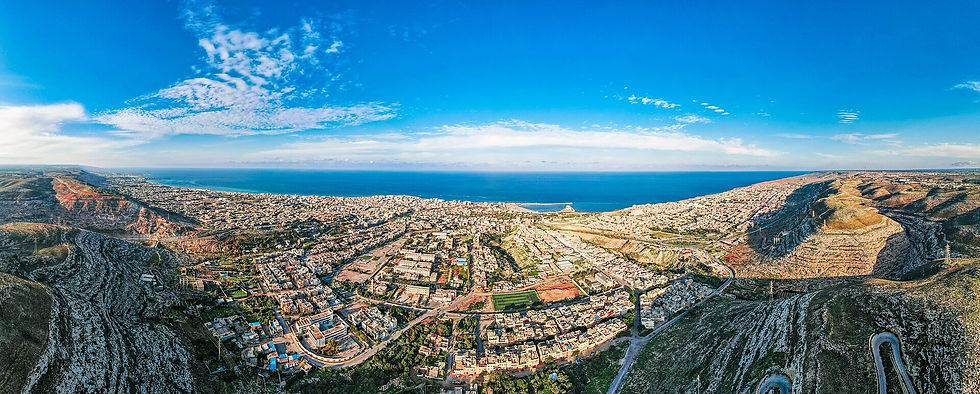
Massive storms have occurred in recent years, from Storm Daniel’s dam‑burst floods in Derna, Libya (a 2023 cataclysm that killed as many as 24,000 people), to Cyclone Mocha’s landfall, also in 2023, on already vulnerable communities in Myanmar and Bangladesh. Deadly flash floods have drenched communities in the United States, throughout Africa, and Central Europe.
These extraordinary storms can be seen as global stress tests for drainage systems, dams, and early‑warning chains. The core challenge is no longer to ask whether the next storm will come but whether our science, technology, and engineering can adapt as fast as the risks are shifting.
Pushing Around the Planet's Hot Spots
El Niño and La Niña are well-known phases of the El Niño-Southern Oscillation (ENSO), a natural climate pattern centered in the tropical Pacific Ocean. They do not conjure storms from nowhere; they move the hot spots of heavy rain, drought, and cyclone activity around the globe.
In some years, regions that are normally dry suddenly face months of above‑normal rainfall while others swing into drought; the pattern often reverses as the cycle evolves. The World Meteorological Organization (WMO) now highlights how recent ENSO phases have contributed simultaneously to severe drought in the Amazon, drier‑than‑normal conditions in parts of Mexico and southern Africa, and wetter‑than‑normal conditions in Central Europe, East Africa, and parts of Asia.
WMO’s leadership has warned that climate change is driving more intense floods and storms worldwide, with “no end” in sight to water‑related extremes.
Crucially, these swings now play out on a warmer baseline. WMO’s leadership has warned that climate change is driving more intense floods and storms worldwide, with “no end” in sight to water‑related extremes as global heating continues. Scientists with the World Weather Attribution organization said the 2024 Rio Grande do Sul event shows that human‑driven climate change and El Niño together made the extreme rainfall more than twice as likely and increased its intensity compared with a cooler climate, according to Reuters. According to the World Weather Attribution group, the news article added, the heavy rainfall “was an ‘extremely rare’ event expected to occur only once every 100 to 250 years” but that this event “would have been even rarer without the effects of burning fossil fuel.”
Dhrubajyoti Samanta, a climate scientist and associate editor of Geophysical Research Letters, stresses that the real problem is the speed of these shifts.
“It is not just about whether we are on El Niño or La Niña anymore,” he told The Earth & I. “It is about how fast conditions swing between extremes and how those swings amplify flood and storm risks.” That volatility means yesterday’s “safe” region can become tomorrow’s flood zone, while climate change turns up the intensity of whatever storms do form.
When Infrastructure Fails the Storm Test
Rio Grande do Sul is not alone in revealing how fragile infrastructure can magnify disaster. In September 2023, Storm Daniel delivered unprecedented rainfall over the Wadi Derna watershed in Libya. The failure of two aging dams released a destructive surge that killed thousands and obliterated parts of the city. A detailed reconstruction found that even intact dams would have struggled under such extreme runoff, but decades of neglect and inadequate risk management dramatically worsened the outcome.
In the Bay of Bengal, powerful Cyclone Mocha struck Myanmar and Bangladesh in May 2023 as a Category 4 storm, threatening some of the world’s most vulnerable coastal communities. However, thanks to accurate forecasts and community‑based early‑warning efforts, Bangladesh was able to evacuate large numbers of people in advance, significantly reducing casualties compared with previous cyclones in the region. Meanwhile, 2024 and 2025 saw record and near‑record floods across Central Europe, East Africa, and parts of China, again overwhelming drainage systems and flood defenses designed for gentler rainfall patterns.
These disparate events share a common thread: extreme rainfall or storm surge interacting with infrastructure that is outdated, poorly maintained, or built in the wrong places. In Rio Grande do Sul, floodwaters overwhelmed drainage, inundated low‑lying neighborhoods and cut off health care and essential services, with informal settlements and poorer communities facing the longest and hardest recovery. “Storm fear,” in this sense, is fear that the systems meant to protect people will not hold.
Forecasts and AI
The good news is that climate information is increasingly being used before storms hit. Samanta notes that across Asia and the Pacific, ENSO forecasts are helping governments manage reservoirs and warn the public months ahead, and he points to India and Bangladesh as examples where better cyclone forecasting has saved lives.
“Fear often comes from uncertainty,” Samanta says, and adds, “Better seasonal forecasts and ocean observations help replace that uncertainty with time to act.”
“Fear often comes from uncertainty,” Samanta says, and adds, “Better seasonal forecasts and ocean observations help replace that uncertainty with time to act.”
New AI tools are strengthening that bridge between science and action. In March 2026, Google announced AI‑driven flash‑flood forecasts for urban areas on its Flood Hub platform, claiming the system can predict local flash‑flood risk up to 24 hours in advance. The model uses Gemini to process millions of historical flood reports and create geotagged datasets, then blends them with weather and hydrological forecasts to pinpoint where water is most likely to rise.
For city managers facing ENSO‑amplified downpours, this offers a tactical advantage: They can preposition mobile pumps to address water surges, close flood-prone underpasses, protect electrical substations, or adjust traffic in the specific districts where risk is highest. At the same time, the tool still depends on internet connectivity and news reporting, so it complements rather than replaces national hydrological services and community‑based early‑warning systems, particularly in data‑sparse regions.
Planning for Variability, Not Averages
If storms are now stress tests, how should cities and coasts be redesigned? Samanta offers a simple rule of thumb for planners: “Plan for variability, not averages, because ENSO keeps shifting the risks.
“Its swings are becoming stronger with climate change,” he continues, “and we’re now seeing that major El Niño events can carry real human and economic costs, so infrastructure needs to be flexible and ready for more extreme climate events.” In practice, this means sizing drains and culverts for deluges—not just “average” rainfall—and designing bridges, embankments, and power substations for “perfect storm” scenarios of above-average rainfall, river flow, and water surge. It also includes treating seasonal forecasts as triggers for preemptive maintenance rather than just background information.
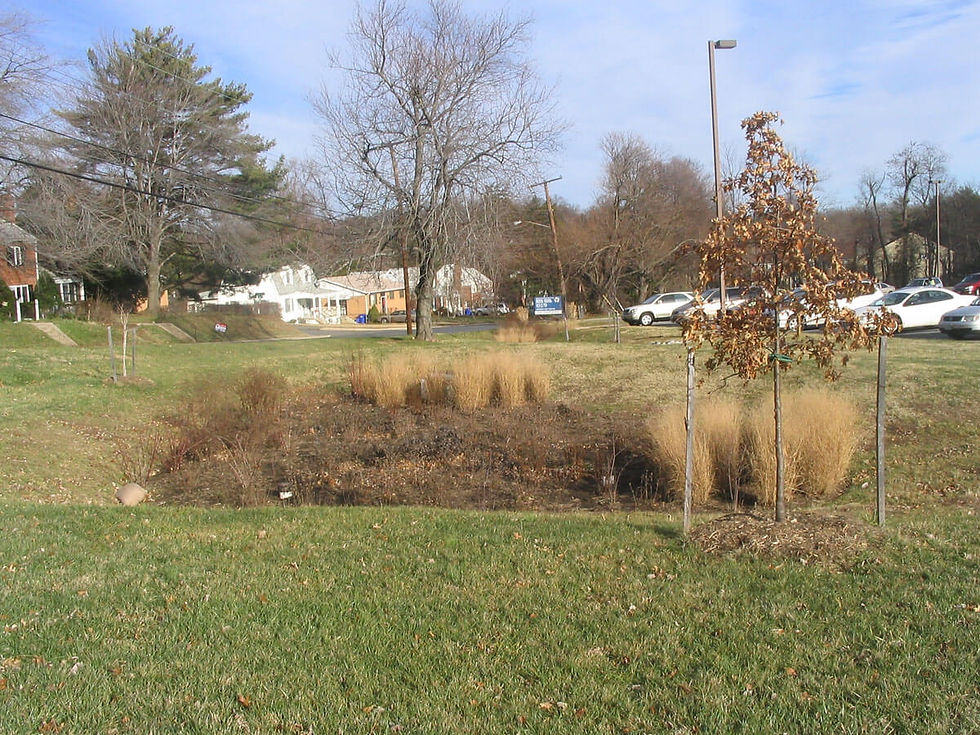
David Ng Chew Chiat, cofounder and executive director of One Smart Engineering, translates that principle into concrete design strategies from Singapore’s experience.
“One of the key measures carried out extensively to mitigate the risks of flash flooding is incorporating Active‑Beautiful‑Clean [ABC] water features such as pockets of rain gardens along the sides of the canal and river … as a temporary detention pond to prevent overloading of the water body during storm,” Ng told The Earth & I. This approach is flexible enough for many Southeast Asian cities, he added.
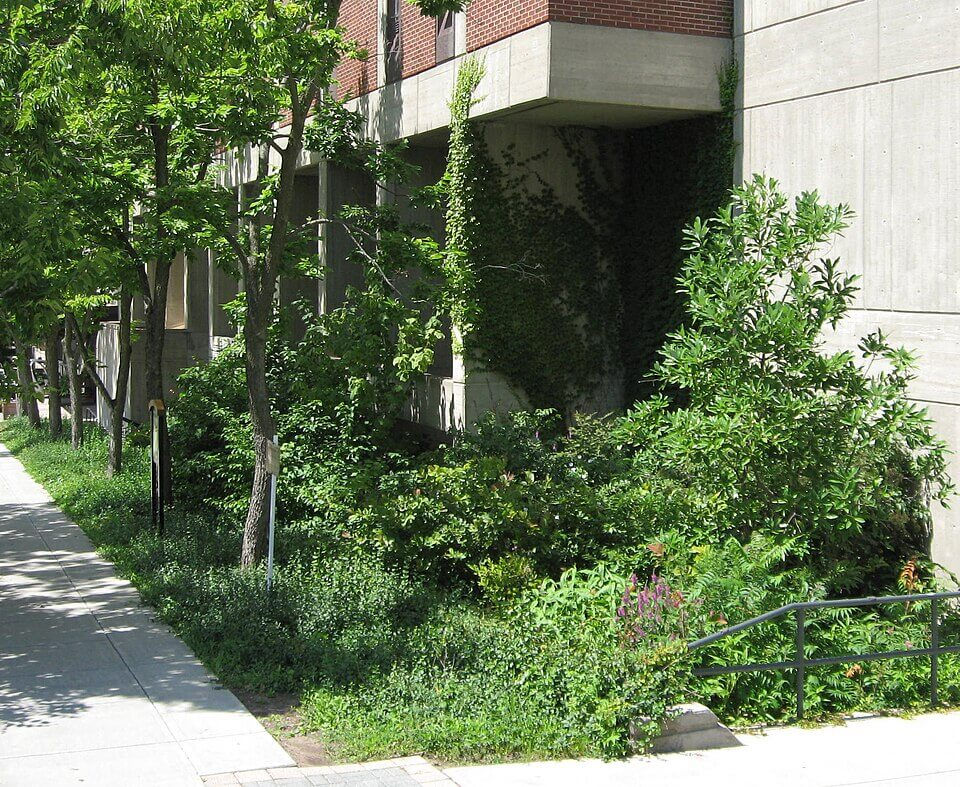
Using the 2024 Brazilian disaster as an example, Ng said that ABC‑style rain gardens and detention spaces would have slowed and absorbed rainfall, buying time and reducing peak flows before they hit critical bottlenecks.
This nature‑based design also cools urban spaces and improves public amenities—an important extra benefit as heat waves intensify, he said.
Rethinking Coasts and Equity
Ng further argues that conventional coastal protection—building massive seawalls and then reclaiming land behind them—can be material‑intensive and carbon‑heavy, paradoxically reinforcing the very warming that drives sea‑level rise.
Instead, he advocates the following, some of which are being implemented in the island of Singapore:
Construction of new buildings with “adaptive foundation” systems. These are specialized foundations designed to adjust to new environmental conditions, such as uneven soil settlement or shifting groundwater, which can occur during flooding.
Building multi‑use structures on coasts that can intercept rising seas, plus host food and energy production activities. Examples of these structures, which are beginning to be constructed worldwide, include porous sea walls, lakes and ponds for temporary storage of floodwater, agricultural portions either underwater or on floating platforms designed for shellfish farming or even dairy production, and tidal or wave-powered energy plants.
Using the kinds of concrete that can actively trap and store carbon dioxide within its structure, either during production or throughout its lifespan. It’s helpful if city planners use newly developed permeable concrete and asphalt in strategic areas. These paving materials have cracks or pores built in to allow rainwater to filter through and be absorbed by the soil beneath.
The core idea is not that every city should copy Singapore’s specific model, but that future defenses must be flexible, multifunctional, and climate‑aligned.
Both experts highlight a persistent equity gap. Samanta points out that while weather forecasts are improving, “they don’t always reach communities in a form they can use or trust,” especially in smaller cities and poorer neighborhoods in the Global South. Bridging this gap requires investing in better models and AI, and also in communication, local capacity, and partnerships, he says. In this way, climate and ENSO information can drive decisions about where people live, how clinics and schools are built, and which streets or shelters are prioritized for upgrades.
Samanta and Ng both say that simple, low‑cost measures—ABC‑style rain gardens, elevated community centers, reinforced clinics, basic flood‑proofing for schools—may save more lives than elite megaprojects if they are deployed where vulnerability is highest. Prime targets for these innovations include Brazilian favelas to riverine settlements in East Africa and outer neighborhoods in South and Southeast Asian cities.
Returning to Brazil
Families in Rio Grande do Sul will long carry the memory of 2024’s flood and how the river rose into their streets, the days spent in crowded shelters, and the slow return to mud‑caked homes. Yet their experience, and that of communities in Derna, in coastal Bangladesh and Myanmar, and in flood‑hit parts of Europe, Africa, and China, offers a blueprint for change.
This blueprint includes treating ENSO forecasts as early triggers, and installing AI‑driven flood tools and robust local warning systems to give people time to act. City planners can proactively embed rain gardens, detention spaces, and adaptive foundations that can resist flooding in their districts.
If the most vulnerable communities are upgraded first, then the next time extreme rain falls on Rio Grande do Sul or any other storm hot spot, water may still spread, but it will be more likely to pool in well-designed parks and basins than in people’s living rooms, the experts say.
“The climate risk isn’t going away; rather, it’s evolving and increasing,” Samanta says. “The real issue is, where we choose to invest and prioritize today will determine how much we lose tomorrow.” If that question guides our choices, storm fear can become a driver of renewal, turning each new ENSO cycle into an opportunity to save more lives and protect more homes than the last.
*Dhanada K Mishra is a PhD in civil engineering from the University of Michigan and is currently working as the managing director of a Hong Kong-based AI startup building technology for the sustainability of built infrastructure (www.raspect.ai). He writes on environmental issues, sustainability, the climate crisis, and built infrastructure.


Great article! Science, AI, and smart engineering can play an important role in building safer, smarter, and more sustainable cities. Combining technology with thoughtful urban planning can help protect communities and improve everyday life.
https://holykailashtours.com/
The scale of that 2024 flooding is staggering—775,000 displaced is a wake-up call that "storm fear" needs to translate into permanent, resilient design, not just emergency response. I've been tracking how cities are rebuilding with nature-based barriers and elevated infrastructure, and Porto Alegre's renewal could be a blueprint for the whole regio https://seedance-2.dev
The scale of that 2024 disaster is staggering—775,000 displaced is a number that should haunt every infrastructure planner. It’s good to see fear finally driving real investment instead of reactive patchwork. I’ve been following similar resilience projects and found a great breakdown of flood-defense tech at https://aiphoto-app.com
The 2024 floods were a brutal wake-up call, and it’s good to see Porto Alegre treating infrastructure as a lifeline, not just a line item. I’ve been following the recovery closely, and the shift from reactive cleanup to proactive storm defense is exactly what’s needed. Check out the latest engineering specs on that. https://image-to-stl.org
The scale of that 2024 flood is staggering—775,000 displaced is a number that should haunt every infrastructure planner. If the city is serious about storm-proofing, they need to model these scenarios in real-time, which is why I've been using https://hi3d.pro