


How People of the Alps Sing Their Love for Nature
Alpine Voices Turn Mountains into Places of Prayer, Joy, and Shared Belonging
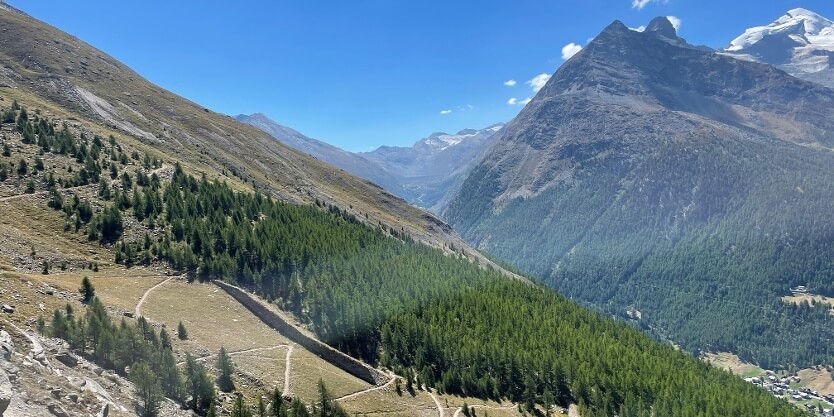
At dawn in the German-speaking Alps, the world begins in silence. The sky’s first pink breath brushes the knife-edge peaks, and the crisp air carries only the faint clang of distant cowbells. Then a voice rises, not loud but confident, its notes curling upward like smoke toward the ridgelines. Another voice answers. Soon two or three weave together, a trail-side chorus drifting through the valley.
For centuries, this is how Alpine mornings have begun, with song offered to the mountains. It is a gentle reminder that, in these high places, music is as much a part of the ecosystem as snowmelt and wind. It’s truly the case that “the hills are alive with the sound of music,” as Julie Andrews sang in the classic film The Sound of Music.
It also shows how communal song, shared walking, and mindful presence can cultivate a population’s love for the Earth and deepen their determination to protect and take care of it.
For in the Alps, music is not just heard; it is breathed with the mountains and offered like prayer to the sky.
Songs as Reverence, and Reverence as Ecology
From the Swiss ranz des vaches melodies and songs to Austrian yodels to the German Wanderlieder songs, Alpine hiking and folk-song traditions have long shaped and been shaped by the relationship between people and landscape.
Alpine folk songs rarely describe nature from a distance. They speak from within it. Lyrics reference mountain winds as companions, meadows as resting places, streams as teachers whose “lively water shows the way.” One of the best-known Wanderlieder, Das Wandern ist des Müllers Lust (To Wander Is the Miller's Delight) revels in the joy of moving water, working millstones, and the delight of wandering outdoors, not as escapism but as a return to one’s rightful element.

One of the best-known Wanderlieder is Der fröhliche Wanderer (The Happy Wanderer), which well illustrates the reverential joy of the mountain hiker as he or she bursts with song. The English lyrics run in part as follows:
I love to go a-wandering,
Along the mountain track,
And as I go, I love to sing,
My knapsack on my back.
Chorus:
Val-deri, Val-dera,
Val-deri,
Val-dera-ha-ha-ha-ha-ha
Val-deri, Val-dera.
My knapsack on my back.
And the concluding verse is:
Oh, may I go a-wandering
Until the day I die!
Oh, may I always laugh and sing,
Beneath God’s clear blue sky!
Many mountain songs express reverence, not worshiping nature as a deity but honoring it as a gift. They reveal an implicit ecological ethic, gratitude for weather, respect for animals, and awareness of one’s vulnerability. In Kein schöner Land (No More Beautiful Country), singers gather beneath the linden tree, praising the beauty of creation “as God’s grace permits.” The spiritual undertone is clear: Time in nature is sacred, communal, and worthy of blessing.
Scholars who study sacred soundscapes, such as those writing in the MDPI journal Religions (2023), note that mountains inherently create conditions for a sense of the divine: vastness, silence, echo, and light. Alpine songs magnify this. When voices rise amid stone and sky, the sound becomes a kind of offering. Many hikers agree with St. Augustine that to sing is to “pray twice” and is a way of aligning breath with sun and air.

Echoes of Herding Bells
The roots of Alpine song lie not in concert halls but in meadows and cattle pastures. Long before hiking became recreation, mountain life demanded constant movement, herding cows to higher pastures, navigating ridges, calling across deep valleys. The ranz des vaches, songs that constituted the traditional Swiss herding cry, were originally melodic signals to guide cows and communicate between herders. Each valley had its own variant, shaped by dialect, terrain, and the acoustics of the cliffs. Research from the Urner Institut Kulturen der Alpen at the University of Lucerne (Switzerland) shows how deeply these forms are tied to local identity.
These calls evolved into melodic expressions recognizable today as early forms of yodeling. Contrary to popular caricature, yodeling is not merely novelty, it is a functional, embodied technique. It shifts rapidly between chest and head voice, allowing sound to jump ridgelines and return as an echo. In this sense, the early Alpine song was a dialogue with the land itself—the singer called, the mountain answered.
By the 18th and 19th centuries, Emily Loeffler argues in Mountain Geist, these practices had shaped a distinct Alpine musical identity, rooted in movement, seasonal migration, and the rhythms of pastoral life. The mountains were not backdrop but partner, shaping timbre, tempo, and even the physical stance of the singer.
When German-speaking Romantic thinkers discovered the Alps, they reimagined wandering as a spiritual and philosophical pursuit.
When German-speaking Romantic thinkers discovered the Alps, they reimagined wandering as a spiritual and philosophical pursuit. This merging of pastoral practicality and Romantic idealism birthed the Wanderlieder hiking songs, which celebrated freedom, beauty, and communion with nature.
The Shared Ritual of Singing While Hiking
While herding shaped early Alpine music, modern hiking culture also plays a vital role. In Germany, the late-19th-century Wandervogel movement—formed of youth critical of industrial life who sought renewal in nature—revived communal singing on trails. They sang ancient folk songs and newly composed Wanderlieder, and harmonized at mountaintop rest stops. Their goal was simple: reconnecting young people like themselves with land, community, and joy.
Today, this tradition continues. Walk any popular trail in Bavaria or Tyrol (Bavaria is a state in southeast Germany and Tyrol a region in northern Italy and western Austria) and you might hear a group pause to sing a familiar refrain. Song keeps rhythm on steep climbs, lightens the pack, and invites camaraderie among strangers. The act of singing together while ascending echoes the communal labor of earlier generations who carried milk, tools, or firewood up the same paths.
Music also slows the hiker’s perception, turning a strenuous trek into attentive presence. When you sing, you breathe differently. You notice air quality, slope, and echo. You attune to weather shifts and the quiet underfoot crunch of stone. In this way, Alpine songs make hikers not just observers of nature but participants in its unfolding.
Instruments That Carry the Landscape
Certain Alpine instruments evolved precisely because they resonate with mountain environments.
The alphorn, with history and acoustics described in organology.net, stretches as long as 4 meters (13 feet) and sends warm, resonant notes across great distances. Historically used for signaling, its tone is shaped by valley acoustics; many alphorn pieces imitate natural patterns such as bird calls or the slow roll of thunder.
The hackbrett (hammered dulcimer) produces a shimmering, water-like sound that mirrors the flow of streams. The accordion and fiddle, carried easily to mountain huts, became staples of communal music-making. Recordings from Smithsonian Folkways’ Mountain Songs and Yodeling of the Alps reveal how seamlessly these timbres merge with open-air environments. Together with the human voice, especially the yodel, their tones create a soundscape inseparable from the Alps themselves.

Reshaping Traditions for a New Generation
Far from fading, Alpine song traditions are experiencing renewal. Youth choirs in Austria and Switzerland compete in yodeling festivals. In Bavaria, hiking clubs blend traditional songs with new compositions about environmental stewardship. Tourism boards promote musical trails such as Tyrol’s Strasse der Lieder (Road of Songs), where trail markers teach songs that hikers can sing at designated viewpoints.
Contemporary musicians fuse folk forms with jazz or electronic textures, introducing Alpine themes to global audiences. Rather than diluting the tradition, these fusions reveal its adaptability. They show that mountain music, like the ecosystems that inspired it, is alive, changing with climate and generational culture.
This revival also reflects a wider longing to reconnect with the natural world. Studies in human ecology note that folk songs encode ecological knowledge and emotional bonds with landscapes. In an era of ecological crisis, Alpine songs feel like reminders of older wisdom, the idea that delight in nature fosters responsibility for nature.

Singing as Stewardship
Music has always shaped human perceptions. In the Alps, songs teach that mountains are not places to exploit but venues to experience new life.
The simple act of singing outdoors makes us better listeners. It encourages humility. When your voice mingles with wind and water, you sense your smallness, yet also you belong. This emotional connection is often what inspires people to protect fragile ecosystems. The Alps face warming temperatures, shrinking glaciers, and increased tourism pressure. Cultural traditions that deepen affection for these landscapes may be vital for their future.
Alpine songs endure because they remind us that when we sing outdoors, we participate in a shared liturgy of stone, sky, and community. The mountains become not just landscapes to admire but places of prayer, joy, and belonging, where every step and every note can be an expression of love for the Earth that holds us.
*Jana Perez-Angelo is a Denver-based writer and multidisciplinary creative and digital strategist passionate about brand storytelling and purpose-driven content. Her work has been featured in Relevant Magazine, Medium, and Faithful Life.


Comments