


Rising Cancer Rates in the Young
Are Modern Lifestyles Fueling a Global Health Shift?

Medical experts around the globe are engaged in vital detective work: to figure out why cancer is increasingly developing among young people. Meanwhile, lifestyle is coming under suspicion as one of the possible contributing factors.
One study conducted by medical experts connected to several institutions, including Harvard's T.H. Chan School of Public Health, described early-onset cancer as an "emerging global epidemic."
The American Cancer Society (ACS) projects that the number of global early-onset cancer cases will surge by a staggering 31% by 2030, accompanied by a 21% increase in global young adult mortality.
According to the data, the most common early-onset cancers (EOCs) include breast, lung, stomach, and colorectal cancers, followed by thyroid, pancreatic, and liver cancers.
The race is on to find what is driving the phenomenon. But with such a complex disease, a single specific driver is hard to pin down, and much remains unknown.

Is It Just Better Detection Rates?
Cancer develops when cellular DNA mutates, causing cells to divide uncontrollably, forming a tumor in an organ or a blood cancer such as leukemia.
The possible contributing factors to such a mutation are varied, ranging from family history to how we live our lives. Figuring out the impact of the factors we can control—such as diet and exercise—may be important in designing prevention strategies that can reduce the incidence of cancer.
Although overall cancer mortality is dropping due to better treatments, alarmingly, the number of new diagnoses in young people is climbing by roughly 1% to 2% annually.
Dr. Meredith Shiels is a senior investigator at the US National Cancer Institute. She led a landmark study that analyzed trends for 33 cancer types among different age groups. The results showed that the incidence of 14 cancer types increased among people under 50, with nine of those types also increasing in older populations.
The results showed that the incidence of 14 cancer types increased among people under 50, with nine of those types also increasing in older populations.
Speaking to The Earth & I, she said there are several factors that can influence cancer incidence rates, including changes in screening and detection and alterations to cancer classification systems.
But sadly, cases are not the only thing moving: Deaths for specific types are also creeping up. Shiels noted that because young adult deaths for certain varieties—like colorectal and uterine cancers—are also increasing, it pointed to a genuine shift, not merely one built on better, or at least different, detection rates.

However, she cautioned that there is still not enough evidence to understand what the primary drivers are, due partly to a lack of data specifically about younger people.
“Much of what we know about cancer risk comes from studies of older people, where cancer risk is highest, so we know a lot less about cancers that occur at earlier ages,” she said.
“It is likely that the same factors that contribute to average onset cancer risk also contribute to early-onset cancer risk, but we cannot say definitively that that is the full explanation.”
Shiels pointed to a recent analysis carried out in the UK that showed that established behavioral risk factors are unlikely to fully explain rising early-onset cancer rates.

Examining Lifestyle Factors
While the specific array of factors contributing to elevated rates of cancer in the young is not yet known, lifestyle has increasingly come under the spotlight.
While the specific array of factors contributing to elevated rates of cancer in the young is not yet known, lifestyle has increasingly come under the spotlight.
Dr. Despina Handolias is a consultant medical oncologist based in Melbourne, Australia, and a member of the Australasian Society of Lifestyle Medicine. A global advocate and researcher in lifestyle medicine, she speaks widely on how lifestyle factors can drive the cellular mutations that are the building blocks of tumors.
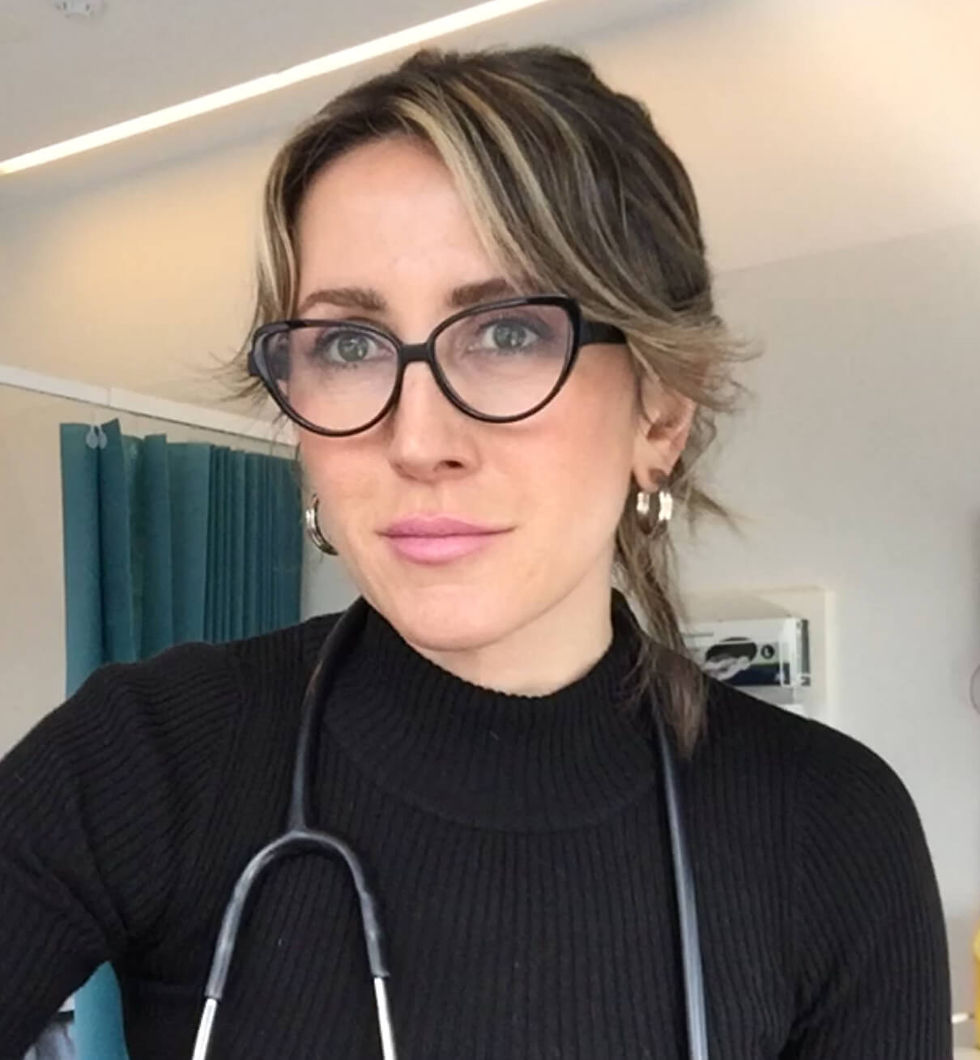
She says research points to a complex picture that includes an accumulation of environmental and lifestyle factors that begin early in life.
“The most significant lifestyle drivers include dietary factors and physical inactivity,” she told The Earth & I.
“This is particularly relevant to the commonest EOCs, including breast and digestive system cancers [and] particularly colorectal cancer. Dietary factors that pose the most risk include ultraprocessed and snack foods, processed meats and red meat, and sugar-sweetened beverages.”
Handolias said that when diets high in these food categories and low in whole plant foods are adopted from an early age, it disrupts the gut microbiome—the ecosystem of trillions of bacteria in our digestive tract that regulates health. Over time, this diet exposes the body to cancer-causing molecules while reducing the diversity of these helpful gut bacteria. This cumulative damage alters the body's metabolic and immune systems, creating an environment where cancer is much more likely to develop.
“Sedentary lifestyles and lack of physical activity affect immune system surveillance. Metabolic factors and gut microbiome health are also likely to significantly impact the rates of EOC,” she added.
Experts also cite other contributing factors when it comes to rising rates. Prof. Marc Gunter is a leading chair in cancer epidemiology at Imperial College London, specializing in how diet, obesity, and lifestyle habits drive tumor development.
He said obesity was an established risk factor for at least 13 cancer types—some of which have been rising in younger people, including cancer of the uterus, colorectal cancer, and pancreatic cancer.

“Recently, our research has shown that excess weight is associated with higher risk of colorectal cancer below age 55. As obesity has been increasing in many parts of the world for the past few decades, it is likely that this explains at least part of the rise in cancers in younger people.”
He said it was not yet fully understood how obesity causes cancer, but added that many of the metabolic and hormonal changes often seen in people with obesity—such as higher levels of the hormones insulin and estrogen—as well as inflammation, can contribute to cancer development and so are likely causes, at least for some cancers.
While the recurring consensus is to exercise caution in classifying cancer rates and their causes, many experts agree that healthy lifestyle habits can help reduce risk and improve overall well-being. They also argue that individuals need greater access to the social, economic, and environmental conditions that support healthy choices.
While the recurring consensus is to exercise caution in classifying cancer rates and their causes, many experts agree that healthy lifestyle habits can help reduce risk and improve overall well-being.
Stephanie McBurnett, RDN, serves as the lead nutrition educator for the Physicians Committee for Responsible Medicine, a US-based health advocacy group of over 17,000 doctors. Her work focuses on translating cancer data into public health policy and actionable, plant-based cancer prevention strategies.

She echoed the view of other experts that there are multiple reasons for the cancer increases, but echoed colleagues that practical lifestyle changes matter.
She said: “The most protective habits are simple but powerful—eat more fiber-rich plant foods, move daily, avoid tobacco, limit alcohol, maintain a healthy weight, and prioritize sleep.”
She said ideally such habits should begin in childhood, but that it was “never too late.”
She added that societies cannot make prevention solely the responsibility of individuals, and that healthy choices must be “accessible, affordable, and built into the places” where people live, learn, work, and receive care.
“Prevention should not be a privilege,” she said.
“Prevention should not be a privilege.”
“Communities need culturally relevant education, affordable healthy foods, safe places to be active, and policies that make the healthy choice the easy choice.”
Avoid a “Blame Game”
Crucially, many experts warn against letting the spotlight on lifestyle devolve into a “blame game.”
Identifying modern habits as potential contributing factors does not mean young cancer patients brought the illness upon themselves. Many experts suggest the rise is being fueled in part by systemic, generational shifts in our food systems, hidden environmental exposures, and altered childhood microbiomes which—when combined with our individual genetics—create forces that no single person can entirely control.
The rise in cancer among the young is an undoubtedly complex picture—and whatever their area of specific expertise, many experts are cautious about attributing it to any one driver alone.
Genetic predisposition, environment, and lifestyle factors form a complex tapestry that medicine is still endeavoring to fully understand. But with the acceptance that more research is needed among the young, as well as a push to make positive lifestyle options more widely available and accessible to everyone, there is hope that rates that are currently going up could one day be brought down again.
*Mark Smith is a journalist and author from the UK. He has written on subjects ranging from business and technology to world affairs, history, and popular culture for the Guardian, BBC, Telegraph, and magazines in the United States, Europe, and Southeast Asia.



Let’s be honest: staring at a grid of gray, yellow, and green tiles at 8:05 AM is the ultimate test of your morning IQ. When your streak is on the line and you are completely blanking on a fifth letter, typing Wordle Hint into Google feels less like cheating and more like a tactical rescue mission.
For anyone following daily lottery draws, having a clear source of results can make checking numbers much more convenient. Organized information helps visitors review recent outcomes and find megachance de hoy results without unnecessary searching.
Thank you for shedding light on such an urgent issue! It’s alarming to see rising cancer rates among young people cookie clicker makes us think about environmental factors and health choices we all face. Truly eye-opening!
I found this while searching for username ideas. The name generator gave me enough inspiration to create a nickname that wasn't already in use.
I really felt your insights on the rising rates of cancer in young people. It’s scary to think about how lifestyle changes are affecting health. ragdoll playground My friend's child has faced this battle, and it’s so heartbreaking!